


What is Fraud Prevention?
Fraud prevention refers to the techniques and strategies used to detect, prevent, and reduce fraudulent activities that can compromise the security and integrity of data, financial transactions, and user interactions.
It is critical to maintaining trust and security in both online and offline environments, particularly for businesses, websites, and bloggers who handle sensitive information.
Fraud prevention is multi-faceted and involves several key components, each aimed at protecting different aspects of a system or process.
How to Implement Online Fraud Prevention
In my journey to implement effective fraud prevention strategies, I've found that using a combination of techniques tailored to my business and website's specific needs and risks is essential. Here's the practical approach I've taken:
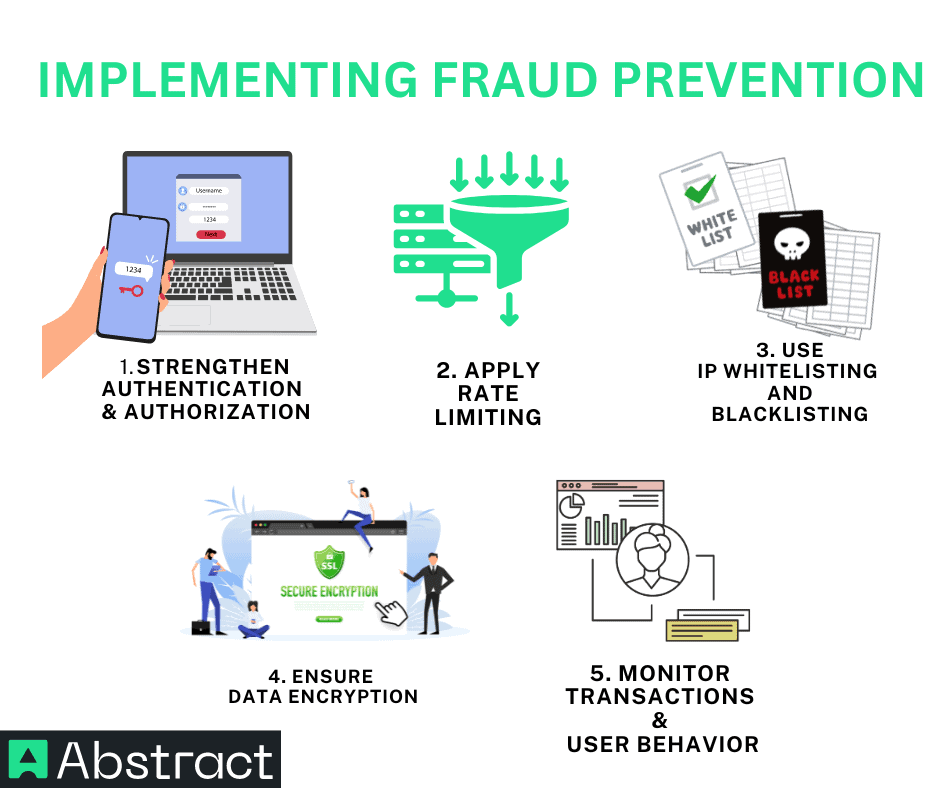
Step 1: Strengthen Authentication and Authorization
I implemented strong authentication methods, such as multi-factor authentication (MFA), to ensure that users are who they claim to be. Additionally, I use role-based access control (RBAC) to limit user permissions based on their roles within the system.
Step 2: Apply Rate Limiting
Next, I set thresholds for the requests a user or IP address can make within a certain period. This helps protect my systems from denial-of-service attacks and other forms of abuse.
Step 3: Use IP Whitelisting and Blacklisting
I created and maintained lists of trusted IP addresses that are allowed access (whitelisting) and known malicious addresses that are blocked (blacklisting). Regular updates to these lists based on the latest threat intelligence are crucial.
Step 4: Ensure Data Encryption
After that, I decided to use HTTPS for all web communications to encrypt data in transit. Additionally, I implement encryption for data at rest to protect stored information from unauthorized access.
Step 5: Monitor Transactions and User Behavior
Lastly, I implemented tools that continuously monitor transactions and analyze user behavior. Setting up alerts for unusual activities, such as large withdrawals, multiple failed login attempts, or access from unusual locations, has been incredibly beneficial.
Practical Example: Using AbstractAPI for Fraud Prevention

One tool that I've found incredibly useful for fraud prevention is AbstractAPI. Here's a quick overview of how I use it:
- I use the Email Verification API to check if email addresses are valid and not associated with disposable or fraudulent domains. This helps ensure that I am dealing with legitimate users.
- The IP Geolocation API identifies the geographic location of an IP address, helping detect access from unusual or high-risk locations. The IP Check Tool checks if an IP address is listed in known blacklists, indicating potential malicious intent.
- With these tools, I set up rules to flag suspicious behavior, such as multiple failed login attempts from a blacklisted IP. This allows me to take immediate action, such as blocking access or requiring additional verification.
Fraud prevention is essential for maintaining a secure and trustworthy online presence. By implementing robust fraud prevention measures and using tools, we can protect our business, website, and users from the ever-evolving threats of fraud.
Frequently Asked Questions
What is fraud prevention?
Fraud prevention is a set of proactive techniques and controls used to detect, deter, and stop fraudulent activity before it causes harm. For online businesses and developers, this means combining authentication measures, monitoring systems, and data validation tools to protect users, transactions, and sensitive data.
How does email validation help prevent fraud?
Email validation checks whether an address is real, deliverable, and not associated with known spam or disposable accounts. By rejecting fake or throwaway emails at sign-up, developers can block fraudulent account creation before it ever reaches the application layer.
What is IP intelligence and why does it matter for fraud prevention?
IP intelligence uses geolocation and reputation data to assess whether a request is coming from a legitimate user or a suspicious source such as a VPN, proxy, or known malicious IP. Flagging high-risk IP addresses allows you to apply additional friction — like MFA — to suspicious sessions while keeping the experience smooth for trusted users.
What is the difference between fraud detection and fraud prevention?
Fraud prevention focuses on stopping fraudulent activity from happening in the first place through controls like rate limiting, IP whitelisting, and strong authentication. Fraud detection identifies fraudulent activity after it has begun — for example, through transaction monitoring and behavioral anomaly alerts — so teams can respond quickly and limit damage.
What is rate limiting in the context of fraud prevention?
Rate limiting caps how many requests a single user or IP address can make within a given time window. This prevents automated attacks like credential stuffing, brute-force login attempts, and denial-of-service traffic — all of which are common vectors in online fraud.
How do you implement fraud prevention in a web application?
A layered approach works best: enforce multi-factor authentication and role-based access control, apply rate limiting on sensitive endpoints, validate user emails and IPs at sign-up, encrypt data in transit and at rest with HTTPS, and set up transaction monitoring with alerts for anomalies like repeated failed logins or access from unexpected locations. Combining these techniques — tailored to your specific risk profile — gives broader protection than any single method alone.
