



The Silent Decay of Your Greatest Asset
Email lists are always changing, whether your team is actively managing them or not.
People switch jobs. They abandon old inboxes. They use burner emails to grab a discount code. They mistype their address on a signup form and never realize it. Over time, even a healthy list starts to decay.
That silent decay creates hidden drag across your whole program:
- More hard bounces
- Lower engagement rates
- More spam complaints
- Broken automations
- Messier reporting
- Higher subscriber costs
Think of your list like inventory. If 15% to 20% of it is unusable, every campaign built on top of it becomes less efficient. The same message, same design, and same offer can produce very different outcomes depending on the quality of the data underneath.
That is why clean email list benefits go far beyond hygiene. Better list health supports better performance.
Why this matters to your boss: healthier data helps the team get more value from the subscribers you already have, without increasing acquisition costs.
A Quick Before-and-After View of the Impact
Here is a simple example of how removing invalid addresses changes performance reporting.
Before vs. After Removing 15% Invalid Leads
Illustrative example
| Metric | Before Cleaning | After Cleaning |
|---|---|---|
| Total Emails Sent | 10,000 | 8,500 |
| Invalid / Dead Emails | 1,500 | 0 |
| Delivered Emails | 8,500 | 8,500 |
| Opens | 2,000 | 2,000 |
| Apparent Open Rate | 20% | 23.5% |
| Actual Open Rate (Deliverable List) | 23.5% | 23.5% |
| Bounce Rate | 15% | Significantly lower |
| Cost to Store / Send | Higher | Lower |
This is the open-rate illusion in action. The campaign did not suddenly become more engaging. The reporting became more honest.
Why this matters to your boss: cleaner data leads to more trustworthy reporting, which makes planning and optimization much easier.
1. It Helps Reduce Bounce Rate
Hard bounces are one of the clearest signs of poor list health. If too many emails go to invalid addresses, your sender reputation can suffer and future campaigns become harder to deliver.
Improving email data quality helps you reduce bounce rate by removing bad addresses before you send.
Practical fixes
- Validate emails at the point of capture
- Re-check older records in your CRM
- Catch typo domains like gnail.com or outllok.com
- Filter disposable or malformed addresses
Why this matters to your boss: fewer bounces protect deliverability and improve campaign efficiency.
2. It Lowers Exposure to Risky Addresses
Not every bad address looks fake. Some appear normal but still create deliverability risk, especially if your list has old, recycled, or suspicious records sitting in it.
This is where list validation helps. Instead of trusting every signup equally, you can screen for addresses that are invalid, disposable, or low quality before they damage performance.
Why this matters to your boss: fewer risky sends means better long-term inbox performance.
3. It Supports Stronger Sender Reputation
Inbox providers pay attention to sending behavior. When you consistently send to valid recipients who engage, that supports a healthier sender profile. When you send to poor-quality addresses, reputation weakens over time.
Good email data quality gives every campaign a stronger foundation.
Healthy list signals include
- Valid recipients
- Lower bounce rates
- Fewer complaints
- Better engagement
- More consistent list hygiene
Why this matters to your boss: stronger reputation gives more campaigns a fair shot at reaching the inbox.
4. It Gives You a More Accurate Open Rate
If 15% or 20% of your list is inactive or invalid, your open rate may look worse than it really is. The issue is not always the subject line. Sometimes the denominator is broken.
This is one of the biggest reasons marketers try to improve email open rates and still feel stuck. They are optimizing creative while reporting on a distorted list.
When you remove dead records, you get a clearer view of how real subscribers are actually responding.
Why this matters to your boss: accurate reporting makes campaign optimization much more reliable.
5. It Can Improve Click-Through Rate
Verified lists contain more real people. Real people click.
When your list is filled with abandoned inboxes, fake signups, and junk records, those dead endpoints drag down engagement metrics and make campaign performance harder to read.
That is one of the most practical clean email list benefits: less noise in your CTR reporting.
Why this matters to your boss: better data helps the team get more value from the same campaign assets.
6. It Helps Reduce Spam Complaints
Some bad email addresses do not bounce. They land in the wrong inbox.
That often happens because of "fat finger" mistakes like:
- gmal.com
- hotnail.com
- outllok.com
When that happens, your message may reach the wrong person or trigger negative engagement signals.
Real-time validation helps catch these issues earlier, before they turn into spam complaints.
Why this matters to your boss: fewer complaints help protect deliverability across future campaigns too.
7. It Keeps Your Automations Reliable
A welcome flow should go to a real subscriber. A nurture campaign should trigger for a real lead. If the email address is fake, duplicated, or invalid, the automation still fires—but the opportunity is wasted.
Poor email data quality creates silent inefficiency in:
- Welcome flows
- Lifecycle campaigns
- Reactivation emails
- CRM-triggered journeys
Validating email addresses earlier keeps bad records from spreading into the rest of your workflow.
Why this matters to your boss: cleaner automation means less waste and better conversion from existing tools.
8. It Improves Lookalike Audience Quality
Your email list affects more than email. It also shapes ad performance when you upload customer or lead lists into platforms like Meta or Google.
If the source list is full of weak, fake, or duplicate records, the audience model starts from bad inputs. Garbage in, garbage out.
A cleaner list helps paid platforms find users who look more like your actual customers.
Why this matters to your boss: stronger seed lists can improve paid efficiency without increasing media spend.
9. It Makes LTV Reporting More Accurate
You cannot measure customer value cleanly if one customer appears three times in your system under slightly different email variations.
Duplicate and inconsistent records distort:
- Customer lifetime value
- Revenue per subscriber
- Cohort analysis
- Attribution reporting
Improving email data quality helps clean up the customer record behind those reports.
Why this matters to your boss: better data leads to more trustworthy reporting and smarter strategic decisions.
10. It Lowers Your ESP Costs
Most email platforms charge based on subscriber count, contacts, or send volume. That means invalid and stale records are not just hurting performance—they are costing money every month.
Removing bad contacts can reduce platform costs immediately while also improving list health.
That is one of the fastest, easiest-to-explain clean email list benefits.
Why this matters to your boss: a smaller, healthier list can improve performance while lowering software spend.
How to Improve Email Data Quality in Practice
The biggest mistake teams make is treating list cleanup like a one-time project.
A better approach is to prevent bad data from entering your systems in the first place.
1. Validate emails at capture
Add validation to:
- Signup forms
- Newsletter forms
- Lead gen forms
- Checkout flows
- CRM imports
2. Re-check older records
Over time, even good data decays. Review older segments like inactive subscribers, imported lists, and legacy CRM contacts.
3. Use validation signals to guide action
Look at signals such as:
- Syntax validity
- MX or domain checks
- Disposable email detection
- Mailbox indicators
- Role-based email detection
4. Make it part of your workflow
This is where AbstractAPI fits naturally. Instead of waiting for manual cleanup, teams can use real-time email validation in forms, internal tools, and automation flows to keep data quality high by default.
Why this matters to your boss: prevention scales better, costs less, and protects more of the funnel.
From List Cleaning to List Health
The strongest email programs do not treat data hygiene like spring cleaning. They treat it like an always-on performance layer.
That is the real shift. Email data quality is not just about removing bad records from an old CSV. It is about protecting deliverability, improving engagement metrics, preserving automation quality, and reducing wasted spend.
If your goal is to improve email open rates, reduce bounce rate, and slow email list decay, better data is one of the highest-leverage fixes available.
AbstractAPI helps teams move from reactive cleanup to proactive validation, so every campaign starts with a healthier foundation.
Call to Action
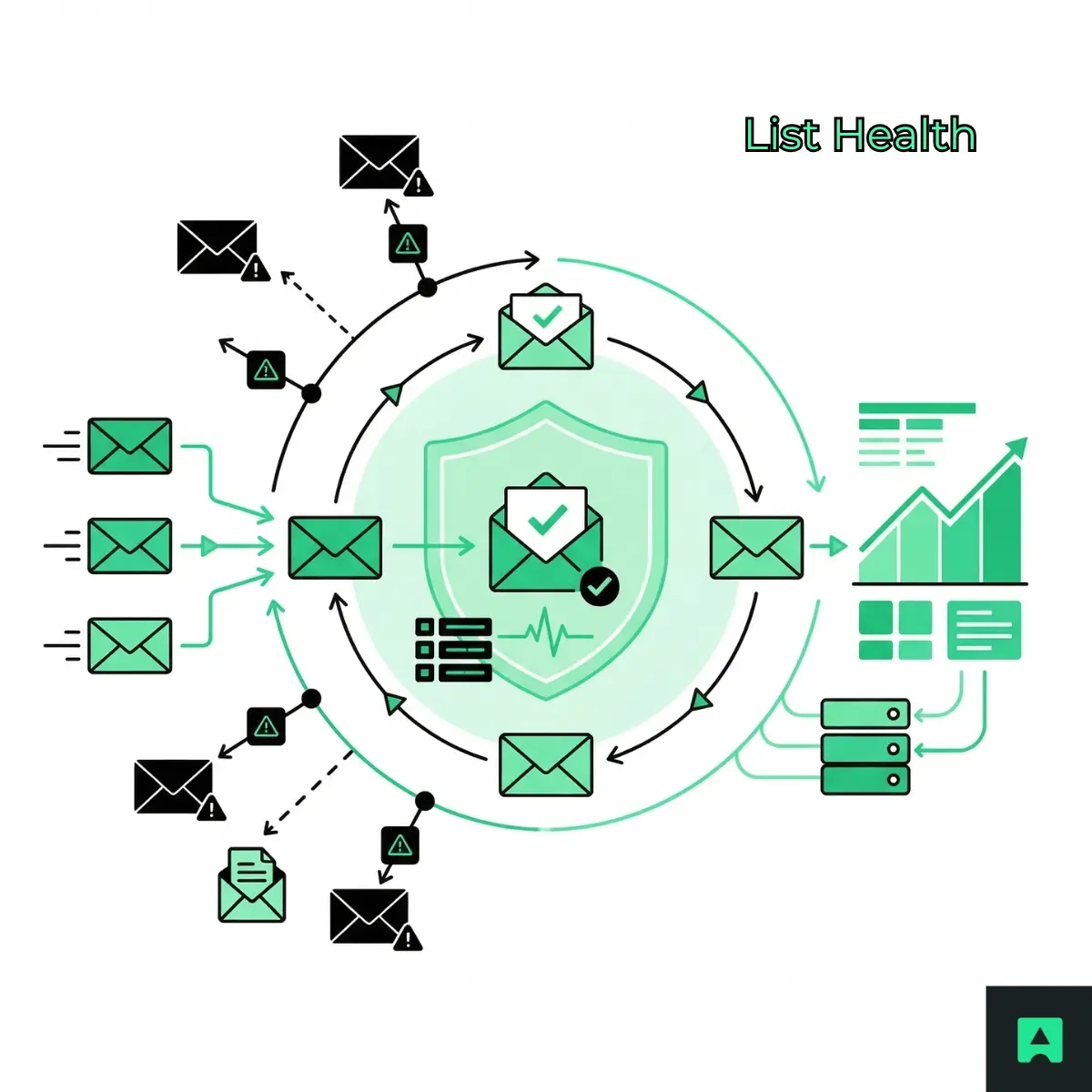
Is your list quietly working against you?
Use Abstract's email validation API to validate email addresses before they enter your CRM, ESP, or campaign workflow. A healthier list leads to cleaner metrics, stronger deliverability, and more efficient email marketing.
Frequently Asked Questions
How does email data quality affect bounce rates?
Sending to invalid, abandoned, or fake email addresses drives up your hard and soft bounce rates. High bounce rates signal to inbox providers that your list is poorly maintained, which damages your sender reputation and reduces how many of your future emails reach the inbox at all.
Why do open rates look inflated when list quality is poor?
Dead or invalid addresses are counted in your total send volume but never open anything, which drags your reported open rate down (not up). Removing them means your open rate reflects actual engagement from real subscribers rather than being diluted by records that can never respond.
Can bad email data increase spam complaints even if addresses look valid?
Yes. Addresses with typo domains (like gnail.com instead of gmail.com) may belong to a real but unintended inbox. That recipient never signed up, so they are likely to mark your message as spam. Email validation catches these typo domains before they trigger complaints.
How does email list quality affect ESP costs?
Most email service providers bill by the number of contacts or emails sent per month. Invalid, duplicate, and inactive records inflate that count without delivering any marketing value. Validating and cleaning your list removes billable dead weight, which directly lowers your monthly platform cost.
When should I validate email addresses: at signup or before each campaign send?
Both, but real-time validation at the point of signup is more effective than periodic batch cleanup. Catching invalid or disposable addresses at the moment of entry prevents bad data from ever entering your list, while pre-send validation acts as a safety net for contacts already in your system.
How does email data quality affect downstream analytics like LTV and attribution?
Duplicate records create false customer counts and inflate total subscriber numbers, which distorts lifetime value calculations, cohort analysis, and attribution reporting. Clean, deduplicated email data is the foundation accurate customer analytics depends on. Poor list hygiene corrupts these metrics silently over time.
