


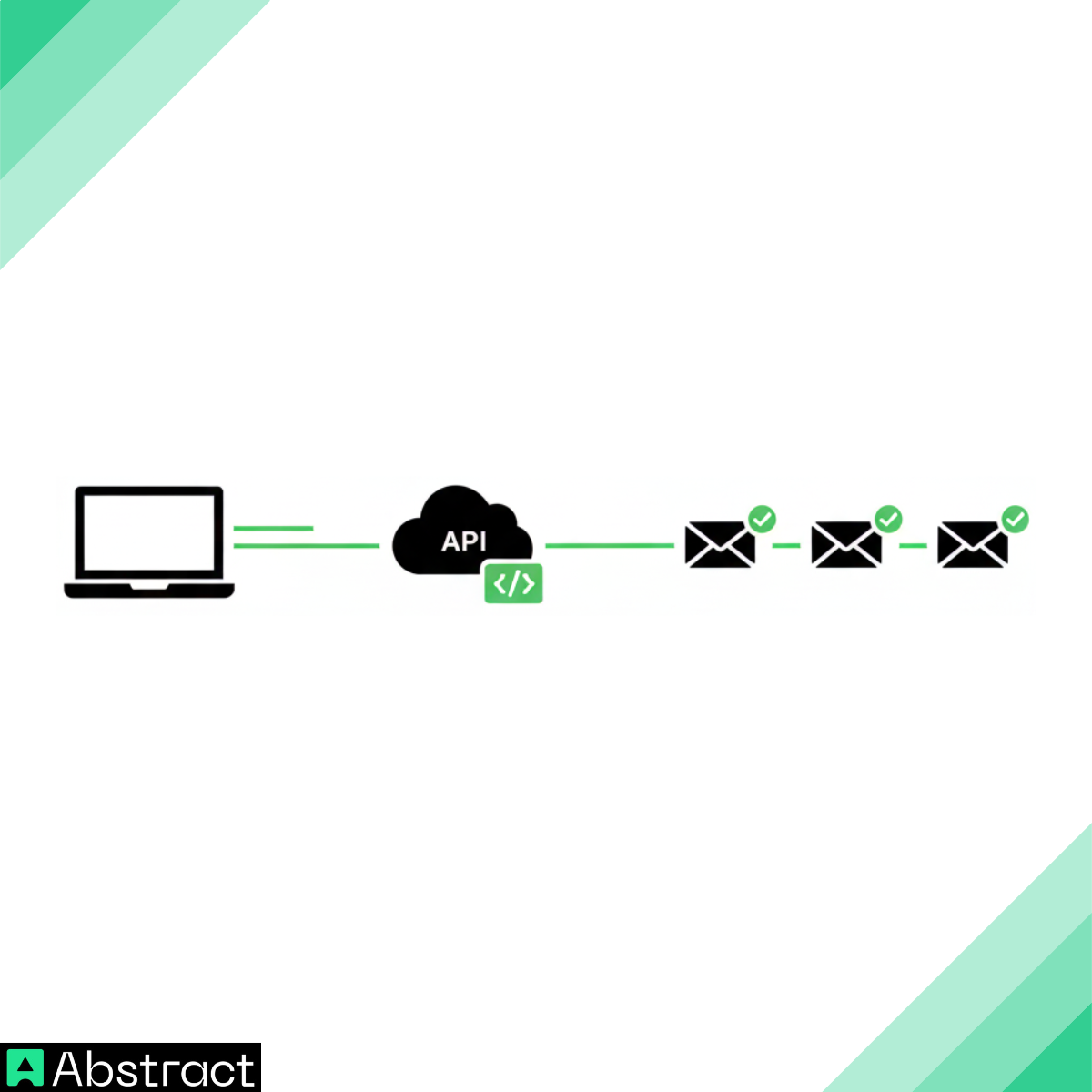
What is the best email sending API for startups?
For startups, the ideal solution balances ease of integration, affordability, and strong deliverability. Platforms like Mailtrap and Resend offer modern SDKs, generous free tiers, and native stream separation, allowing teams to launch reliable email features without managing complex infrastructure.
Quick Comparison of the Top Email Sending APIs
| Provider | Best For | SDK Languages | Dedicated IP | Starting Price (2026) |
|---|---|---|---|---|
| Mailtrap | Deliverability + stream separation | Node.js, PHP, Ruby, Python, Java, .NET, Go, Elixir | Yes | $15/mo |
| Resend | Modern web apps | Node.js, Python, Go, Ruby | Yes | ~$20/mo |
| Postmark | Transactional speed | Node.js, Python, PHP, Ruby, .NET, Java | Yes | ~$15/mo |
| SendGrid | Enterprise scale | Node.js, Python, Go, PHP, Java, C#, Ruby | Yes | ~$19.95/mo |
| Amazon SES | High-volume cost | Node.js, Python, Java, Go, PHP, .NET, Ruby | Yes | ~$0.10/1k emails |
Top Email Sending APIs Compared
1. Mailtrap — Deliverability-first transactional and bulk sending
Mailtrap SMTP service separates transactional and bulk email onto isolated IP pools by default, so a spike in bulk complaints doesn't touch the reputation of password resets or receipts.
Key features
- Native stream separation on every plan
- SPF, DKIM, and DMARC configure automatically
- DKIM keys rotate automatically every month
- MCP server and Agent Skills for AI coding assistants
Deliverability tools
- Dedicated IP with automatic warmup on Business and above
- Bounce and spam complaint categorization
- Reputation monitoring on Business and Enterprise
- Webhook events for delivery, bounce, and complaint tracking
SDK support
Node.js, PHP, Ruby, Python, Java, .NET, Go, Elixir.
Pricing (2026) - Free tier covers 4,000 emails a month, no credit card required. Paid plans start at $15/month for 10,000 emails; the Business plan ($85/month) adds the dedicated IP with automatic warmup.
Best for: Teams that need transactional and bulk email kept separate for deliverability, without assembling extra infrastructure.
2. Resend — Best for modern React and Next.js apps
Resend is designed for developers building with serverless architectures and component-driven frameworks.
Key features
- React-based email templates
- Clean REST and SDK interfaces
- Real-time logs and analytics
- Domain authentication with SPF/DKIM automation
Deliverability tools
- Dedicated IP available
- Suppression management
- Bounce handling
- Reputation monitoring
SDK support
Node.js, Python, Go, Ruby, REST.
Pricing (2026) - Free tier available. Paid plans start around $20/month for ~50k emails.
Best for: Teams that want a modern email sending api that integrates naturally into contemporary JavaScript stacks.
3. Postmark — Fastest transactional delivery
Postmark specializes exclusively in transactional email streams, allowing it to optimize latency and reliability.
Key features
- Very fast message delivery
- Separate transactional and broadcast streams
- Detailed activity history
- Minimal configuration required
Deliverability tools
- Dedicated IP options
- Automatic SPF/DKIM setup
- Bounce and complaint tracking
- Suppression lists
SDK support
Node.js, Python, PHP, Ruby, .NET, Java.
Pricing (2026) - Starts around $15/month for 10k emails.
Best for: Time-sensitive messages such as password resets, OTPs, and receipts.
4. SendGrid — Enterprise scale with AI deliverability
Operated by Twilio, SendGrid supports massive volumes and complex workflows.
Key features
- Marketing and transactional capabilities
- Advanced analytics dashboard
- Template management
- Global infrastructure
Deliverability tools
- Dedicated IP pools
- AI-driven Deliverability Insights
- Reputation monitoring
- BIMI and DMARC support
- Suppression management
SDK support
Node.js, Python, Go, PHP, Java, C#, Ruby.
Pricing (2026) - Free tier available. Paid plans start around $19.95/month for 50k emails.
Best for: Large applications needing a scalable email sending api for both transactional and marketing use.
5. Amazon Simple Email Service — Lowest cost at high volume
Part of Amazon Web Services, SES provides unmatched cost efficiency for large-scale systems.
Key features
- Extremely low per-email pricing
- Deep AWS integration
- Event publishing via SNS and CloudWatch
- Fine-grained sending controls
Deliverability tools
- Virtual Deliverability Manager
- Dedicated IP pools
- Domain authentication automation
- Reputation dashboards
SDK support
Node.js, Python, Java, Go, PHP, .NET, Ruby.
Pricing (2026) - Approximately $0.10 per 1,000 emails, plus data transfer.
Best for: Organizations sending millions of emails monthly within AWS infrastructure.
How to Implement a Send Email API in a Modern Stack
Most providers expose a REST-based send email api that follows a similar workflow.
Step 1: Authenticate your domain
Configure DNS records:
- SPF
- DKIM
- DMARC
Authentication is essential for deliverability and brand trust.
Step 2: Install the SDK
Example using Node.js: npm install resend
Step 3: Send your first message
Typical usage of a send email api:
await resend.emails.send({
from: "Acme <hello@acme.com>",
to: "user@example.com",
subject: "Welcome!",
html: "<p>Thanks for joining.</p>",
});
Most providers also support templates, attachments, batch sending, and webhooks for delivery events.
How to Choose the Right Email Sending API

Selecting among the Best Email Sending APIs depends on your workload, scale, and operational needs.
Match the provider to your use case
- High deliverability → Mailtrap
- Transactional only → Postmark
- Marketing + transactional → SendGrid
- High-volume AWS workloads → Amazon SES
- Modern web apps → Resend
Evaluate deliverability capabilities
Look for:
- Dedicated IP availability
- Automatic SPF/DKIM configuration
- Suppression management
- Bounce and complaint tracking
- Reputation monitoring
- BIMI readiness
Start with clean email data
Even the most advanced email sending api cannot compensate for poor data quality. Invalid, disposable, or risky addresses damage sender reputation and increase bounce rates.
Before sending, validate addresses using the Email Validation API from Abstract API. Removing bad addresses improves deliverability, reduces costs, and protects your domain.
For deeper guidance, see:
- https://www.abstractapi.com/guides/email-validation
- https://www.abstractapi.com/guides/email-validation/what-is-smtp
These resources explain validation techniques and when to use API-based delivery instead of SMTP.
Compare pricing at scale
Initial pricing rarely reflects long-term costs. Consider:
- Cost per 1,000 emails
- Dedicated IP fees
- Support tiers
- Overages
- Data transfer charges
Production Integration Tips
To maximize performance when deploying a send email api:
- Warm up new domains gradually
- Separate transactional and marketing streams
- Monitor bounce rates continuously
- Use webhooks for delivery tracking
- Rotate API keys regularly
Deliverability is an ongoing process, not a one-time setup.
Final Thoughts: Choosing Among the Best Email Sending APIs
The Best Email Sending APIs in 2026 prioritize deliverability, analytics, and developer experience rather than simple message transmission.
Startups may favor ease of integration and cost, while enterprises focus on scale and advanced tooling. High-volume systems often optimize primarily for price efficiency.
Regardless of provider, success depends on proper authentication, reputation management, and clean contact data. Treat email infrastructure as a core component of your application architecture.
Frequently Asked Questions
What is an email sending API and why do developers use one?
An email sending API is a service that lets your application send email through a managed infrastructure instead of running your own mail server. Developers use them because the provider handles IP reputation, authentication records (SPF, DKIM, DMARC), bounce processing, and deliverability, so you can focus on building features rather than maintaining email infrastructure.
Which email sending API is best for transactional email?
Mailtrap and Postmark are both strong choices for transactional email, with native stream separation and fast inbox placement for receipts, password resets, and notifications. SendGrid is a strong alternative at larger scale, while Amazon SES is the most cost-efficient option for high-volume transactional sending on AWS at around $0.10 per 1,000 emails.
What's the difference between transactional and marketing email APIs?
Transactional email APIs (such as Postmark, Resend, and Amazon SES) act as a managed SMTP relay for system-triggered messages like order confirmations and password resets. Marketing email APIs include campaign tools, list management, and bulk sending features aimed at newsletters and promotions. Using separate streams for each type protects your sender reputation, since a spike in unsubscribes from a marketing campaign won't affect delivery of critical transactional messages.
Do I need to validate emails before using an email sending API?
Yes: email validation is a prerequisite for sender success. Sending to invalid or non-existent addresses raises your bounce rate, which damages your sender reputation and can get your account suspended by the API provider. Running addresses through a validation API before adding them to your sending list keeps your list clean and your deliverability high.
Which email sending APIs support Node.js, Python, and other popular languages?
Most major providers offer official SDKs for Node.js, Python, Ruby, PHP, Go, Java, and C#/.NET, plus a REST API as a fallback for any language. Resend has a particular focus on the Node.js and React/Next.js ecosystem, while SendGrid and Amazon SES have the broadest library coverage across languages. Mailtrap covers eight languages including Node.js, PHP, Ruby, Python, Java, .NET, Go, and Elixir.
How do DMARC, DKIM, and SPF affect which email API I should choose?
All reputable email sending APIs require you to configure SPF, DKIM, and DMARC DNS records on your sending domain before you can use your own domain as the "from" address. Stricter DMARC enforcement across major inbox providers means that emails failing authentication are increasingly rejected or sent to spam. When evaluating an API, check how straightforward their domain authentication setup is and whether they provide domain warmup guidance to build a positive sending reputation from scratch.
