


How Phone Validation and Verification Are Different
Before you spend ~$0.05 per verification with a major API like Twilio Verify, you should validate the number's authenticity:
- Phone validation (e.g., AbstractAPI's Phone Validation API) checks if a number is real, its carrier, and whether it's VoIP or mobile.
- Phone verification actually proves ownership, usually by sending a code or using silent carrier signals.
Filtering out invalid or VoIP numbers with a phone validation API saves money and cuts fraud risk before you call the expensive verification API.
Why You Need Verification Beyond Validation
Prevent Fake Signups With Phone Validation
Fake signups drain budgets and skew analytics. By combining validation with verification, you:
- block bot signups with invalid numbers
- only send OTP or silent auth to legitimate mobile numbers
- stop fraudsters before they cost you money
SMS pumping fraud happens when attackers repeatedly trigger SMS OTPs to cost-per-message routes or premium numbers. Major verification APIs now include fraud detection to mitigate this problem, but it still helps to validate first.
The 2026 Verification Landscape: Big Five APIs
Here's how the leading phone number verification APIs stack up for developers in 2026.
Twilio Verify — The Gold Standard
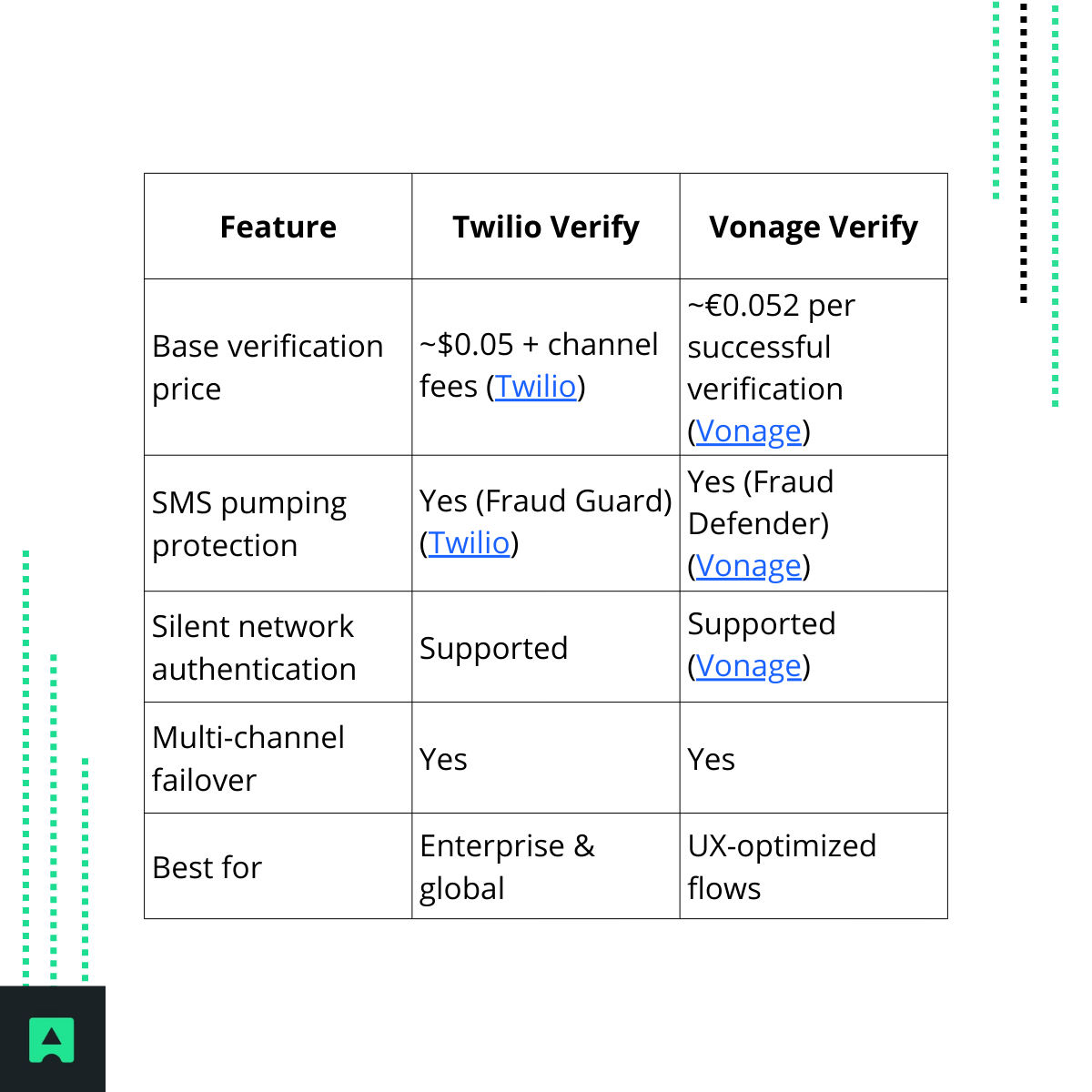
Twilio Verify remains a dominant choice for implementing phone verification with high-quality fraud prevention and global support. It offers multi-channel authentication (SMS, WhatsApp, voice, email, and Silent Network Authentication). Typical Twilio Verify pricing is roughly $0.05 per successful verification plus channel fees, making it predictable for enterprise use.
Key strengths
- 100 % protection from SMS pumping with Fraud Guard.
- Silent Network Authentication for low-friction verification.
- Wide channel support and global deliverability.
Considerations
- Costs add up at scale due to fees per verification and per channel.
Vonage Verify — The UX Leader
Vonage emphasizes smooth user experiences with adaptive multi-channel workflows and silent authentication that removes OTP entry friction. Vonage's pricing hovers around €0.052 per successful verification.
Key strengths
- Smart failover across silent auth, WhatsApp, SMS, and voice.
- Silent Authentication that eliminates OTP entry, boosting conversion.
Considerations
- Higher per-verification cost but strong UX benefits for consumer apps.
Telesign Verify — Security Specialist
Telesign's Verify API focuses on deep network-level intelligence and flexible routing across channels like SMS, WhatsApp, and silent verify.
Key strengths
- Telecom-grade data insights for risk scoring.
- Unified multi-channel fallback.
Plivo — The Value Alternative
Plivo offers verification with competitive costs and fraud shielding on SMS pumping without extra fees.
Key strengths
- Lower total cost with zero verification fees.
- Built-in fraud shield at no extra cost.
Considerations
- Less global carrier coverage than Twilio or Vonage.
Sinch — The Enterprise Powerhouse
Sinch focuses on enterprise use cases with Flash Call verification and direct carrier connections for Android-centric flows.
Key strengths
- Flash Call offers cheaper verification for some markets.
- Enterprise-grade reliability.
Comparative Table: Twilio vs. Vonage Verify Cost
Technology Trends in Phone Verification
Silent Network Authentication
Silent Network Authentication verifies users using carrier-level data without requiring user input. It's resistant to SIM swap, phishing, and OTP interception because no code is sent to the user. This is quickly becoming the preferred OTP alternative in 2026 for reducing friction and fraud.
WhatsApp and Multi-Channel OTP
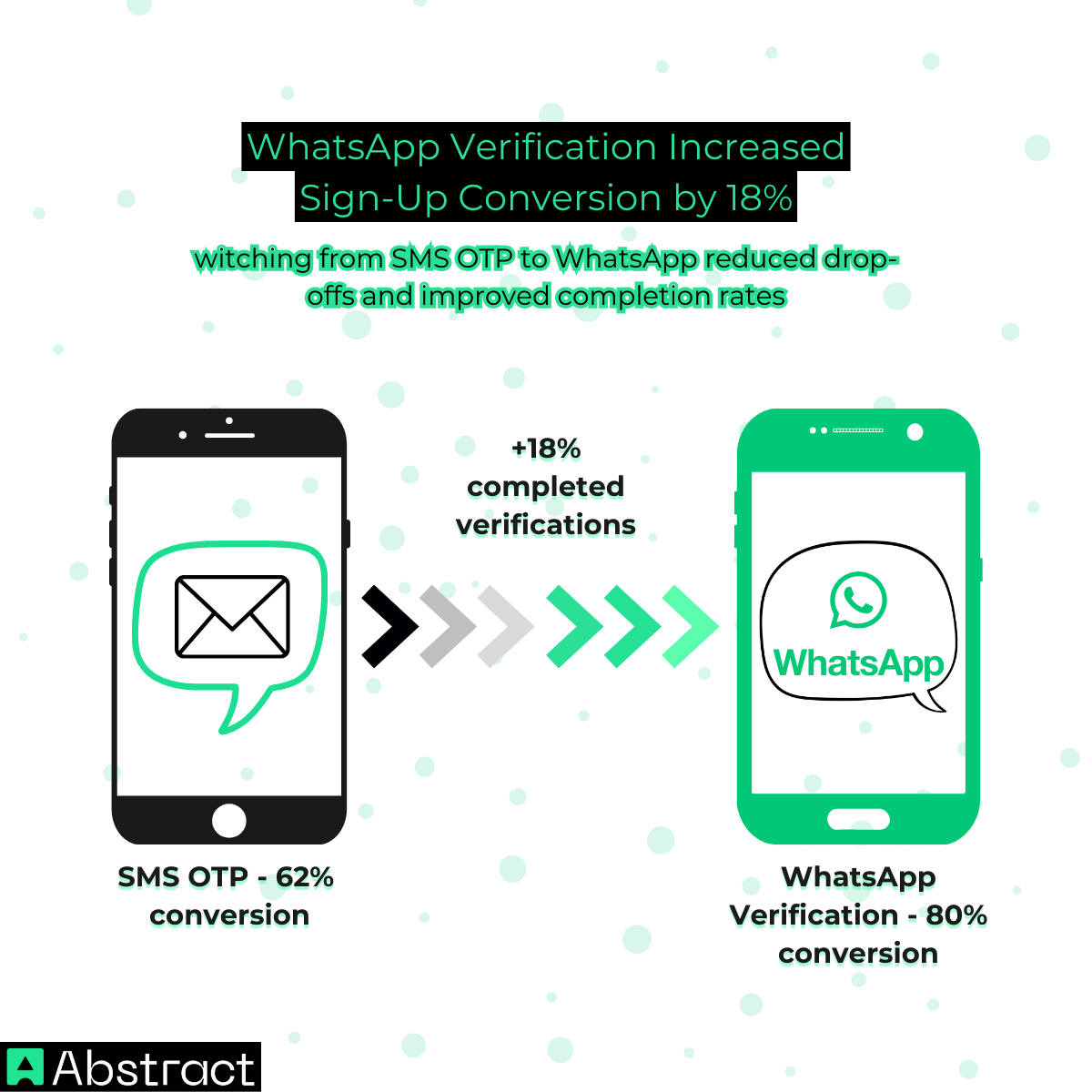
SMS isn't the only channel anymore. WhatsApp and other channels often offer better deliverability and lower user friction, especially in LATAM and APAC regions. Many APIs now support these alternatives natively.
Developer Guide: Python Phone Verification
Here's how you can combine AbstractAPI's phone validation with a verification API in Python to reduce cost and fraud:
import requests
# Step 1: Pre-Validate with AbstractAPI (Filter out VoIP/Bots)
validation_res = requests.get(
"https://phonevalidation.abstractapi.com/v1/?api_key=ABS_KEY&phone=+14155552671"
)
data = validation_res.json()
if data['valid'] and data['type'] == 'Mobile':
print("Number is valid Mobile. Proceeding to Verification.")
# Step 2: Call your chosen verification service (e.g., Twilio or Vonage)
else:
print(f"Blocked Risk: Number is {data['type']}. Skipping expensive OTP.")
Verify Phone Number API Free?
Many verification services offer small trial credits, but no major provider gives a meaningful free tier for production verification. Counting on free verification for scale is unrealistic.
AbstractAPI Spotlight: Phone Validation API
AbstractAPI's Phone Validation API checks phone number validity, carrier, line type (mobile, VoIP), and fraud risk signals. Using validation before verification helps teams reduce verification cost and block bots early.
Use it to
- Filter out VoIP numbers that are often abused.
- Lower your verification cost by only verifying legitimate mobile numbers.
- Improve security posture before sending OTP or silent auth.
Conclusion
In 2026, the best phone number verification API is about identity assurance, fraud resistance, and seamless user experience. Silent Network Authentication and strong fraud prevention are now essential, not optional. Pair AbstractAPI's phone validation with an enterprise verification API like Twilio or Vonage to achieve both cost efficiency and robust security.
Frequently Asked Questions
What is the difference between phone number validation and verification?
Validation checks whether a phone number is real, properly formatted, and identifies its carrier and line type (mobile, landline, or VoIP), without contacting the user. Verification goes further by proving the user actually owns the number, typically through a one-time passcode sent via SMS, voice call, WhatsApp, or Silent Network Authentication. Running validation before verification lets you filter out invalid or VoIP numbers before spending money on OTP delivery.
Why should I validate a phone number before sending a verification OTP?
Verification APIs charge per attempt, and sending OTPs to invalid, VoIP, or disposable numbers wastes budget and exposes your system to SMS pumping fraud. A phone validation API like Abstract's can check line type and validity in real time, so you only trigger the downstream verification step for legitimate mobile numbers. This two-step approach cuts both cost and fraud risk before any SMS is sent.
Which phone number verification API is best for most developers?
Twilio Verify is the most widely recommended option in 2026, offering multi-channel delivery (SMS, WhatsApp, voice, and Silent Network Authentication), built-in Fraud Guard that provides 100% protection from SMS pumping, and pricing around $0.05 per verification. Vonage Verify is a strong alternative if you prioritize smart failover and regional deliverability, particularly in LATAM and APAC. For enterprise-scale or carrier-level intelligence needs, Telesign and Sinch are also worth evaluating.
What is Silent Network Authentication and should I use it?
Silent Network Authentication (SNA) verifies a phone number by checking it against carrier-level data in the background, without asking the user to enter any code. This removes OTP friction entirely and protects against SIM swap and phishing attacks that exploit user-entered codes. It is quickly becoming the preferred alternative to SMS OTP in 2026, and both Twilio Verify and Vonage Verify support it alongside traditional channels.
How can I use a phone validation API to reduce sign-up fraud?
At sign-up, pass the submitted number through a validation API to check whether it is a real mobile number and not a VoIP or temporary line. VoIP numbers are commonly used in fraudulent account creation because they can be generated in bulk at low cost. Rejecting or flagging VoIP numbers before they reach your verification or onboarding flow is one of the most cost-effective fraud controls available to developers.
How do I integrate a phone validation API in Python alongside a verification service?
The recommended pattern is to call Abstract's Phone Validation API first to confirm the number is valid and mobile, then pass it to your chosen verification provider (such as Twilio Verify) only if it passes. Abstract returns JSON with fields like valid, type, and carrier that you can check before triggering the OTP flow. This keeps your integration lightweight: one HTTP GET for validation and one POST to start verification, while avoiding unnecessary verification charges on bad numbers.
